

Quantum computing is a rapidly evolving field with the potential to revolutionize the way we approach computing. The ability to solve problems exponentially faster than classical computers could put quantum computing in a position to have a significant impact on many industries.
This article provides an accessible and informative guide to the basics of quantum computing, including key terms and concepts, how it works, and its pros and cons. The goal is to break down the barriers of quantum computing and provide a detailed overview of this exciting and rapidly evolving technology.

Quantum theory is a set of principles that govern the behavior of matter and energy on a subatomic level. Unlike classical physics, which describes the behavior of macroscopic objects, quantum theory deals with the behavior of particles that are incredibly small and often behave in ways that seem counterintuitive.

Superposition is the idea that particles can exist in multiple states simultaneously. For example, a particle can be in two different locations at the same time or spin up and down simultaneously. This principle has profound implications for computing: by combining superposition with carefully designed interference, quantum algorithms can guide computations toward correct answers more efficiently than classical methods for certain problems.
Entanglement creates correlations between particles such that measuring one immediately determines the outcome of measuring the other, no matter how far apart they are. Importantly, this cannot be used to send information faster than light, but it does allow quantum computers to coordinate qubits in ways classical systems cannot, enabling faster computation for specific problems.
The uncertainty principle, also known as Heisenberg's uncertainty principle, states that certain pairs of properties, like a particle's position and momentum, cannot simultaneously have precisely defined values. The more precisely one is known, the less precisely the other can be.
Interference refers to the way quantum states combine and interact with each other. In quantum computing, interference is used to amplify correct computational paths while canceling out incorrect ones. This ability is essential for guiding quantum algorithms toward the right answer efficiently.
Decoherence is the process by which a quantum system loses its quantum properties due to interaction with its environment. When decoherence occurs, superposition and entanglement break down, causing qubits to behave more like classical bits. Managing decoherence is one of the biggest challenges in building reliable quantum computers.
So, what are the basics of quantum computing? Quantum computing is a computing paradigm that relies on the principles of the quantum mechanical model. Unlike classical computing, which uses bits to represent information as either a 0 or 1, qubits can exist in a superposition of both 0 and 1 at the same time, allowing quantum computers to perform many calculations simultaneously.
Two important quantum computing concepts are quantum gates, which are operations that transform the state of qubits, and quantum algorithms, which are sets of instructions that allow quantum computers to solve specific problems.
One of the most well-known quantum algorithms is Shor's algorithm, which can factor large numbers exponentially faster than any classical algorithm. Once large, fault-tolerant quantum computers exist, this could allow them to break widely used cryptographic protocols like RSA. While quantum computing is still in its early stages of development, it has the potential to impact many industries, from finance to healthcare.
And let’s not forget simulators. These simulate the behavior of a quantum computer on a classical CPU or GPU. Quantum cloud simulators are particularly useful, as they allow users to test their quantum programs on a CPU/GPU before running them on a real quantum device. BlueQubit, for example, provides one of the fastest quantum simulators, allowing users to run quantum programs with ease.

Qubits are the fundamental units of information in quantum computing. Unlike bits, which can only be 0 or 1, qubits use superposition to exist in multiple states at the same time. This allows quantum computers to process large amounts of information in parallel. Qubits can be physical entities such as ions, photons, or superconducting circuits, and their manipulation is key to quantum computations. Their ability to entangle with other qubits supports correlations that boost the computational capabilities of quantum systems.
Quantum gates are the building blocks of quantum circuits—similar to logic gates in classical computing. They manipulate the states of qubits by applying certain quantum operations like flipping states, creating superposition, or generating entanglement. Unlike classical gates, quantum gates operate on complex amplitudes, making it possible to transform quantum states. Common gates include the Hadamard gate (for superposition) and the CNOT gate (for entanglement).
As sequences of quantum gates that are applied to qubits, quantum circuits form the structure of quantum computations. These circuits encode algorithms that carry out tasks like factorization, optimization, or data analysis. A quantum circuit begins with initializing qubits, followed by applying gates, and ends with measurements that extract results. The design and complexity of a quantum circuit determine the efficiency of the computation, making circuit optimization crucial for real-world applications.
Quantum measurement refers to the process of extracting information from qubits by collapsing their quantum states into classical outcomes. This is a key step in quantum computing as it translates probabilistic quantum information into practical results. Measurements can affect the state of a qubit, so performing them strategically preserves the integrity of computations. Advanced measurement techniques guarantee accurate extraction of results, allowing quantum computers to solve problems effectively.
Quantum hardware serves as the physical platform for quantum computing. Depending on the technology, this includes superconducting circuits, trapped ions, photonic devices, or silicon-based qubits. Maintaining qubits in a stable quantum state requires the hardware to be under precise environmental control, such as ultra-cold temperatures and isolation from external noise. Quantum hardware also contains the infrastructure for controlling and reading out qubit states, which is crucial for reliable quantum computations.
Different approaches to building qubits define how quantum computers are designed and what problems they are best suited for. Each type has its own strengths, limitations, and technical challenges.
These are the most widely used qubits today, built using superconducting circuits cooled to extremely low temperatures. They offer fast operation speeds and are used by companies like IBM and Google, but require complex cooling systems and can be prone to noise.
Trapped ion systems use electrically charged atoms held in place by electromagnetic fields. They are known for high accuracy and long coherence times, making them very stable, but they tend to operate more slowly than superconducting systems.
These qubits use particles of light (photons) to carry information. They are less affected by environmental noise and can operate at room temperature, but building scalable systems with them is still challenging.
Spin qubits use the spin of electrons in semiconductor materials. They are promising because they can potentially integrate with existing chip manufacturing technologies, but they are still in earlier stages of development.
Topological qubits are designed to be inherently resistant to errors by encoding information in the topology of quantum states. They are still largely experimental, but could significantly improve stability if realized at scale.
Unlike classical computing, where performance is often measured by speed or processing power alone, quantum computing requires a different set of benchmarks. These metrics focus on stability, accuracy, and the ability to solve meaningful problems.
The number of qubits in a quantum computer is one of the most visible metrics. More qubits allow for more complex computations, but quantity alone doesn’t guarantee better performance.
Quantum volume is a holistic metric that measures the overall capability of a quantum system. It takes into account qubit count, error rates, connectivity, and circuit complexity to reflect real-world performance.
Quantum operations are prone to errors. Metrics like gate fidelity and readout accuracy measure how reliably a quantum computer performs calculations. Lower error rates are critical for scaling useful applications.
Coherence time refers to how long a qubit can maintain its quantum state before decoherence occurs. Longer coherence times allow for more complex computations to be completed.
Gate speed measures how quickly quantum operations are performed, while circuit depth refers to how many operations can be executed before errors accumulate. Together, they determine how complex a computation can be.
Quantum computing is expected to have a significant impact on various industries, including finance and healthcare, due to its ability to solve problems that are impossible for classical computers to tackle. Below are some examples of the emerging use cases and benefits of quantum technologies for 21st-century society.
As one of the most common quantum computing applications, quantum cryptography is a technique that uses quantum mechanics to secure communications.
Unlike classical cryptography, which is based on mathematical algorithms, quantum cryptography uses the principles of quantum mechanics to protect information. It offers a high level of security, as any attempt to intercept or measure the information will disturb its quantum state. This has a wide range of implications in national security, cryptocurrencies, and e-commerce.
Quantum computing can accelerate drug discovery by simulating and analyzing the behavior of molecules more efficiently than classical computers.
Quantum computing could help researchers identify new drug candidates faster and with greater accuracy, potentially reducing the time and costs associated with bringing new drugs to market. By using quantum mechanics to understand the behavior of molecules, researchers can develop more precise and effective drugs, and potentially find treatments for diseases that are currently incurable.

Quantum computing can be used to perform complex financial modeling and risk analysis.
The ability of quantum computing to handle large datasets and complex calculations simultaneously can help financial institutions optimize their investment portfolios, manage risk, and improve pricing models. With the help of technologies by quantum computing companies, financial institutions can make more informed decisions, which could lead to greater profits and reduced risk.
Quantum computing has the potential to transform the field of artificial intelligence by helping scientists develop faster and more efficient machine learning algorithms.
For example, quantum computers could help optimize the training of deep neural networks, or enable the simulation of large-scale quantum AI models. By combining quantum computing and artificial intelligence, researchers can potentially develop AI systems that are more intelligent and powerful than those we have today.
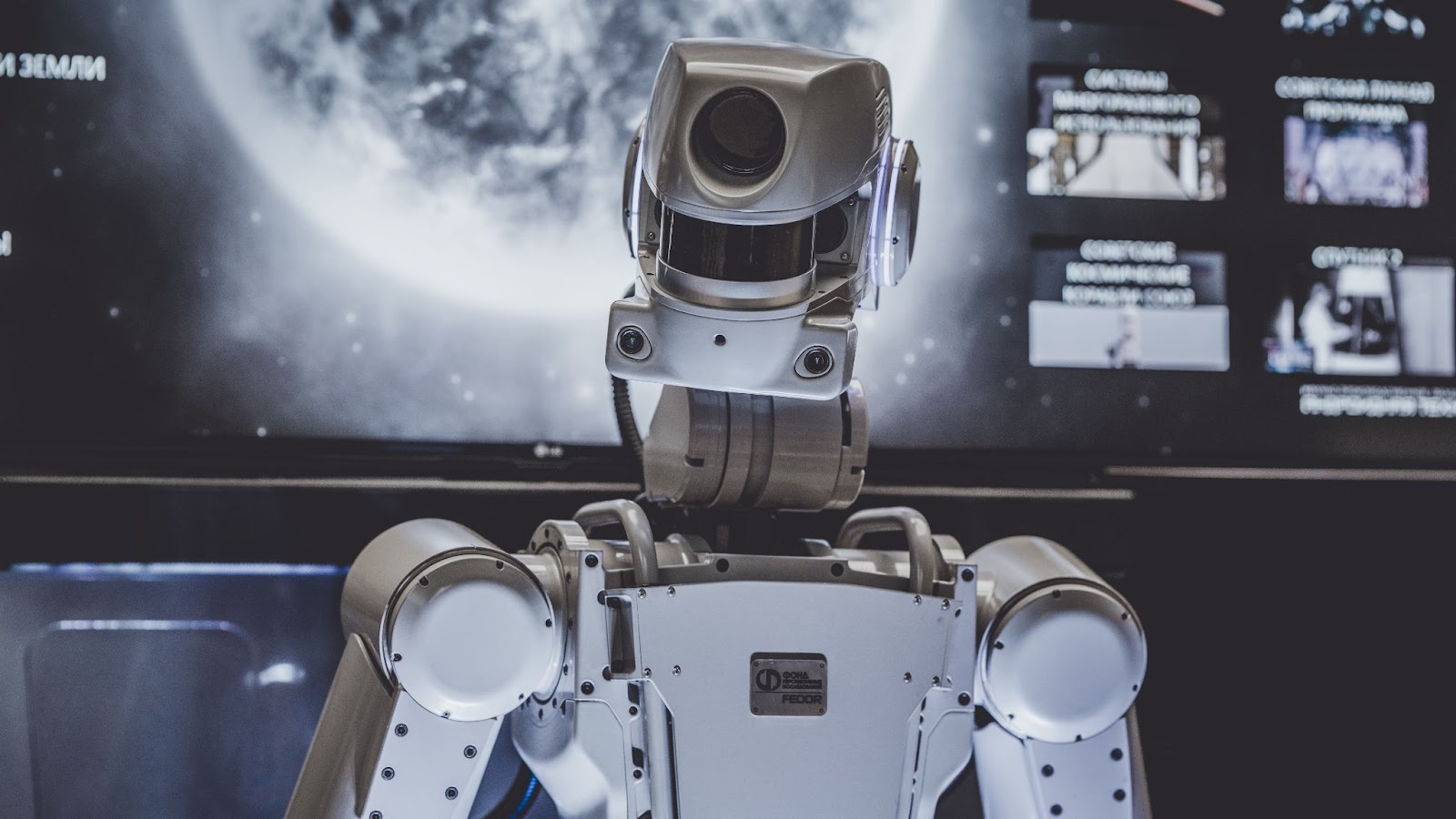
Quantum computing can be used to optimize energy usage in a variety of industries, from manufacturing to transportation.
By simulating and analyzing the behavior of molecules and materials, quantum computers can help identify ways to reduce energy consumption, increase efficiency, and reduce waste. This could potentially lead to significant cost savings and a reduced carbon footprint.
Quantum computing is not a replacement for classical computing—it is designed to solve specific types of problems that are difficult or impractical for traditional systems. Its advantages come from leveraging superposition, entanglement, and interference to explore many possibilities at once.
Quantum computers are ideal for problems that involve finding the best solution among many possibilities. This includes route planning, supply chain optimization, portfolio management, and scheduling. These problems often have a large number of variables and constraints, making them computationally expensive for classical systems.
Quantum systems are naturally good at simulating other quantum systems. This could make them particularly useful in chemistry, materials science, and drug discovery, where modeling molecular interactions is extremely complex for classical computers.
Quantum algorithms can enhance certain machine learning tasks, especially those involving large datasets and complex pattern spaces. While still an emerging area, quantum computing may improve optimization and feature selection in AI models.
Quantum computers can speed up certain search and sampling tasks. For example, they can find specific items in large datasets more efficiently than classical algorithms or generate samples from complex probability distributions.
As quantum computing evolves, it’s important to distinguish between systems that are useful and those that are truly superior to classical computers. These two stages are often referred to as quantum utility and quantum advantage.
Quantum utility refers to the point where a quantum computer can perform a task that is practically useful, even if it is not significantly faster or better than classical alternatives. At this stage, quantum systems can contribute to real-world workflows, often alongside classical computing, by handling specific parts of a problem. This is where most current quantum applications sit today, providing value in areas like optimization experiments, simulations, and early-stage machine learning use cases.
Quantum advantage, on the other hand, is reached when a quantum computer can solve a problem more efficiently, accurately, or cost-effectively than the best known classical methods. This means a clear, measurable benefit over classical systems. Achieving quantum advantage at scale is still an ongoing challenge, as it requires more stable qubits, lower error rates, and better algorithms.
Quantum computing is advancing quickly, but it is still in an early stage. Qubits are still fragile and sensitive to noise, leading to errors and short coherence times. Scaling systems is also difficult, as building large, stable quantum processors requires major advances in hardware, cooling, and control systems. On top of that, many quantum algorithms are still experimental, and practical applications that consistently outperform classical methods are still emerging.
Despite these challenges, progress is steady. Improvements in qubit stability and error rates are making systems more reliable, while hybrid quantum-classical approaches are enabling near-term use cases. Industries like pharmaceuticals and finance are already exploring applications, and cloud-based access is expanding adoption.
While the concepts around quantum computing may seem daunting for newcomers, we encourage everyone to explore this exciting new technology, as it has the potential to impact many industries and solve some of the world's most complex problems.
BlueQubit offers an accessible platform for beginners to start exploring quantum computing, with user-friendly features -and access to fast quantum simulators and QPUs to help users run quantum programs with ease.
BlueQubit’s quantum computing software provides an easy-to-use interface, integration with open-source libraries like Cirq and Qiskit, and access to fast quantum simulators and real QPUs that allow anyone to run quantum programs with ease. So why not give it a try and see what you can achieve with BlueQubit?
Quantum computing is a type of computing that uses the principles of quantum mechanics to process information. Unlike classical computers, which use bits to represent either 0 or 1, quantum computers use qubits that can represent both 0 and 1 simultaneously. This allows quantum computers to perform many calculations at the same time, making them powerful enough to solve complex tasks much faster than traditional computers.
Quantum computing differs from classical computing in the way information is processed and stored. Classical computers use bits, which can only be 0 or 1, while quantum computers use qubits, which can exist in multiple states at the same time thanks to superposition. Quantum systems also use entanglement and interference to solve problems more efficiently than classical systems. These features allow quantum computers to solve problems, like large-scale optimization and cryptography, that are impractical for classical computers.
Qubits, or quantum bits, are the fundamental units of information in quantum computing. Unlike classical bits, qubits can exist in a superposition of states. This makes it possible for quantum computers to carry out multiple calculations at the same time, significantly boosting their computational power. Qubits also allow for entanglement, a key phenomenon that increases the efficiency and accuracy of quantum computations.
Quantum entanglement is where two or more particles become linked, so the state of one particle instantly affects the state of the other, no matter how far they are from each other. In quantum computing, entanglement is used to create correlations between qubits, allowing for faster and more efficient computations. This makes it possible for quantum computers to solve complex problems by processing multiple possibilities simultaneously.
Quantum computing has the potential to solve problems that are currently beyond the reach of classical computers. It can revolutionize fields like cryptography, drug discovery, optimization, and artificial intelligence by providing unprecedented computational power. Quantum systems can also improve energy efficiency and solve large-scale challenges in areas like logistics and climate modeling. As quantum computing technology advances, it has the potential to drive innovation and redefine what is computationally possible.


